Running a retail load carrier fleet isn't the same as controlling it

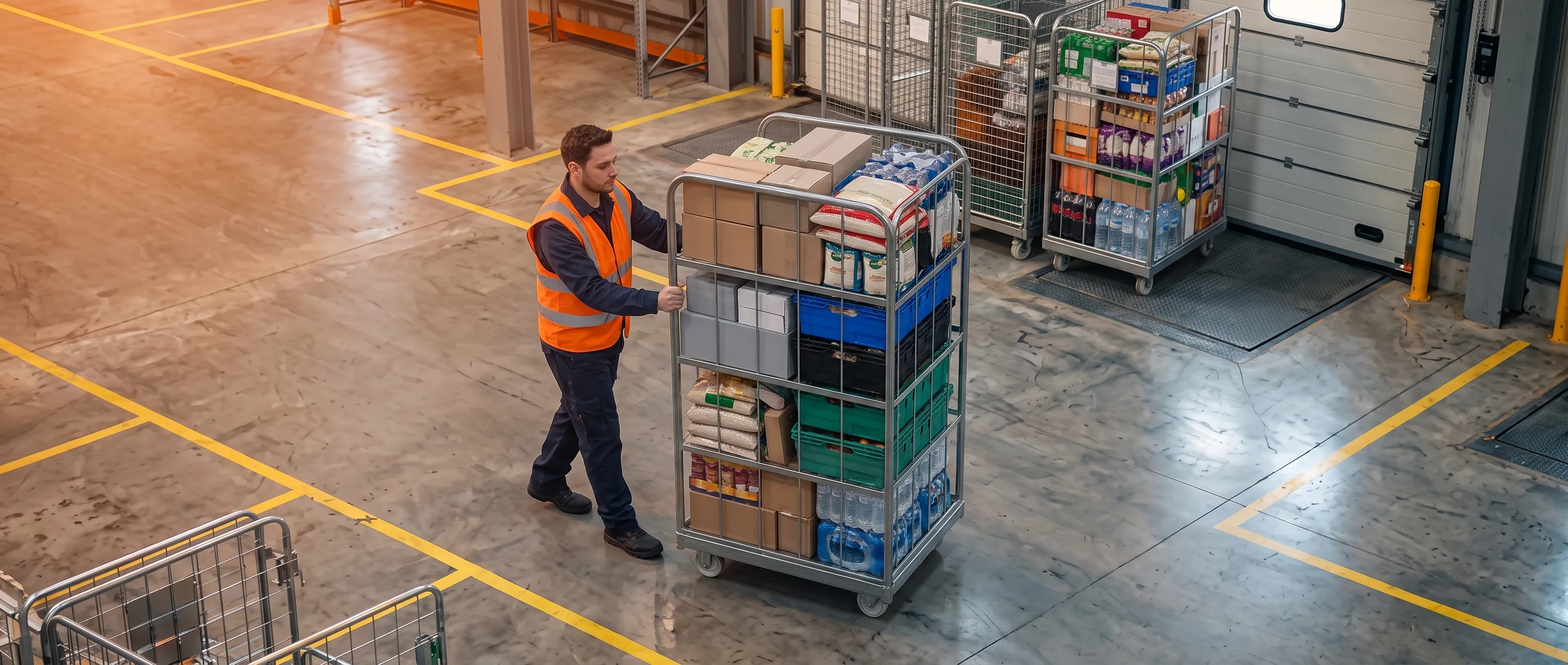
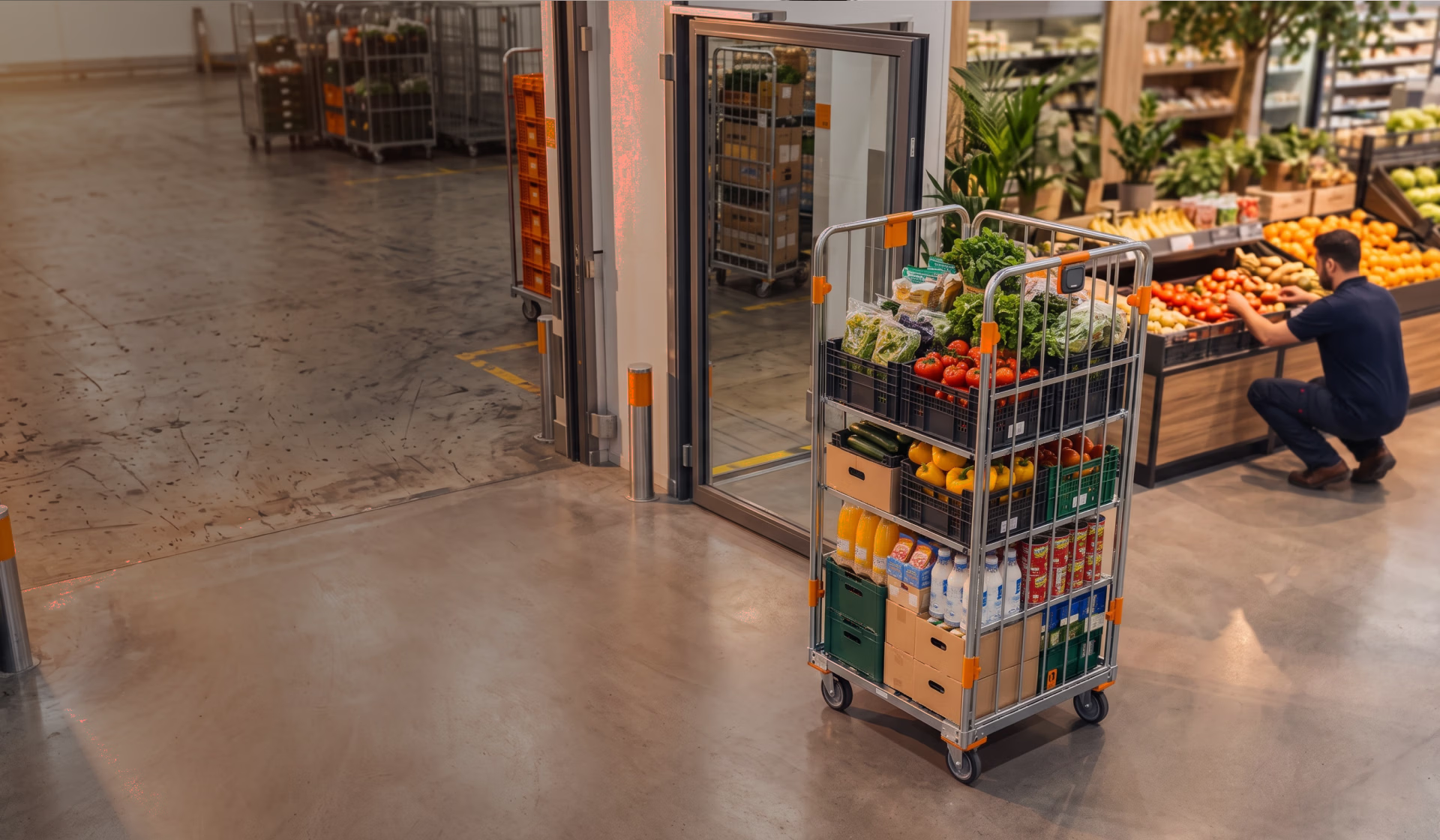
Pallets, roll containers and crates move constantly between your DCs, stores and return points, so the picture of where they are changes with every movement. CLC connects the load carriers you already own, so you can plan on facts and lay the foundation for supply chain optimisation.

  • Fleet utilisation

    Loss becomes visible at the source and pool sizes are planned on facts, so you need smaller buffers and can steer your fleet instead of compensating for what you cannot see.

  • PPWR compliance

    PPWR asks retail to prove the reuse of load carriers within its own network with real rotation data and every registered movement adds to the auditable record you need, without reconstructing it afterwards.

  • Supply chain optimisation

    Reliable load carrier data is the foundation for leaner, more predictable operations, from better on-time-in-full performance to freeing up working capital tied up in oversized safety stock.

Knowledge that grows

Load carrier data that builds on itself

Visibility is only the beginning of what your load carrier data can do. Each new insight adds to what you already know, so you create value from the first implementation while the same data goes on to answer bigger questions about optimizing your supply chain operations. 

  • Insight into where your load carriers are and how they move

  • Early warnings on imbalances, delays and unusual patterns

  • Verifiable records for PPWR, supplier disputes and internal reporting

Ready for PPWR

PPWR compliance for closed-loop retail load carriers

Under PPWR, load carriers that circulate within one company's own network, such as between your DCs and stores, must reach full reuse by 2030. This means retailers will need to prove reuse with rotation-level evidence rather than estimates, which is the kind of evidence CLC builds from every registered movement of your load carriers. 

  • Rotation and reuse data for every connected load carrier 

  • Reuse data collected as part of daily operations

  • One data foundation for compliance, control and optimisation

How CLC works for retail

There is no need to connect your entire retail network at once, because we start with the question you need answered today and expand the solution as the knowledge it creates reveals new opportunities.

  • 1. Start where it matters

    We start with your question, such as where your load carriers are, not with technology. CLC delivers the complete solution as one dedicated partner, with value from the first implementation.

  • 2. Optimise with knowledge

    Together we decide which insights create the most value, such as dwell time, utilisation or turnaround times. We then turn them into concrete improvements that lower buffer stock, reduce manual reconciliation and improve on-shelf availability.

  • 3. Connect the ecosystem

    Every load carrier and location you add makes your picture more complete. Through TTAN™, an independent network for digital supply chains, and through partners who connect too, your view extends beyond your own coverage.

With CLC

  • Prepared for peak season

    You know how many load carriers are available and where, so you can prepare for peak periods and keep stores supplied when demand is highest.

  • One shared record

    Disputes over delivered shipments are settled against one shared record and on-time-in-full data lets you compare suppliers on facts.

  • Less time counting

    Registered movements replace manual counts and reconciliation, so staff spend less time chasing load carriers and more time on work that adds value.

Without CLC

  • Peak season planning on estimates

    Shortages of pallets or roll containers tend to surface during peak periods such as Christmas, exactly when they are hardest to resolve.

  • Separate records per party

    Disputes are settled between two versions of the truth and supplier performance is judged on experience rather than hard delivery data.

  • Manual counting

    Manual counts and reconciliation calls take up staff time and each count captures only a single moment in a fleet that keeps moving.

Get a free supply chain quickscan

Let's uncover the hidden potential in your asset flows.

One quick scan. Zero obligations. Backed by real expertise.

Frequently asked questions

What determines the cost of a CLC solution?
CLC's pricing reflects the business value its data and insights create, rather than the volume of data collected or the technology used to collect it. The best starting point is a free supply chain Quickscan, in which we identify where our solution can create the most value for your operation.
Does CLC work with our existing ERP, WMS or TMS?
Yes, CLC connects directly to your existing dispatch software and updates locations and travel logs automatically, so your team no longer has to enter that data by hand. You keep your ERP, WMS and TMS for planning and execution, while CLC fills the data gaps between locations and handovers, so there is no need to start over.
Do you offer a pilot or trial phase?
CLC starts with a free supply chain Quickscan, which is a short, no-obligation consultation in which we look at your supply chain, discuss your key challenges and identify where our solution can bring clarity and control. If you want to move forward, a follow-up meeting explores your situation in more depth and where a solution needs to be tested in a new environment or for a unique use case, we may run a pilot.
Is there a minimum number of load carriers needed to start?
There is no fixed minimum, because the right scope depends on your use case and business needs. Whether you start with a small, specialised group of load carriers or a large and varied fleet, the solution is scaled to fit your operation.
Do we need to connect all our load carriers at once?
No, you can start with one type of load carrier or a few locations, for example roll containers moving between several DCs and stores. From there, you add load carriers, locations, transport movements or data points step by step, as the knowledge you gain shows where the next value lies.

Reducing loss and supporting PPWR is where it starts, yet the real value lies further ahead: a supply chain that gets smarter with every connection, moving retail from reactive firefighting towards continuous, data-driven optimisation.